

The Perfect One-Day Ras Al Khaimah Itinerary: From the Mountains to the Sea
The perfect one-day Ras Al Khaimah itinerary, from the mountains to the sea. Discover top stops, timings and tips for an unforgettable day trip.

Ras Al Khaimah is a destination of contrasts. In a single day, you can travel from the peaks of the Hajar Mountains to palm-filled valleys, historic forts, a working pearl farm, an old market and a mangrove-lined waterfront.
For a first visit, the best approach is not to race between attractions across the entire emirate. Instead, follow one natural route from the mountains in the north towards Ras Al Khaimah city and the coast.
The route:
Jebel Jais → Dhayah Fort → Suwaidi Pearls, Al Rams → Eysheat Awal Restaurant → National Museum & Old Town → Kuwaiti Souq → Al Qawasim Corniche
Start in the Mountains at Jebel Jais

Begin the day with the drive up Jebel Jais, the UAE's highest mountain. The paved road winds through the Hajar Mountains, with increasingly dramatic views as you climb.
Make Jais Viewing Deck Park your main stop. Located around 1,250 metres above sea level, its viewing platforms overlook rugged peaks, deep valleys and, on clear days, the Arabian Gulf. The park opens from 8:00 a.m., making it an ideal first stop before the day gets warmer.
There is no need to fill the morning with multiple mountain attractions. Enjoy the drive, stop at the viewpoints and leave time to explore the rest of Ras Al Khaimah.
Adventure seekers can make the day more energetic by adding an activity such as Jais Flight or Jais Sledder, although doing so may mean dropping one of the later stops.
Descend to Dhayah Fort
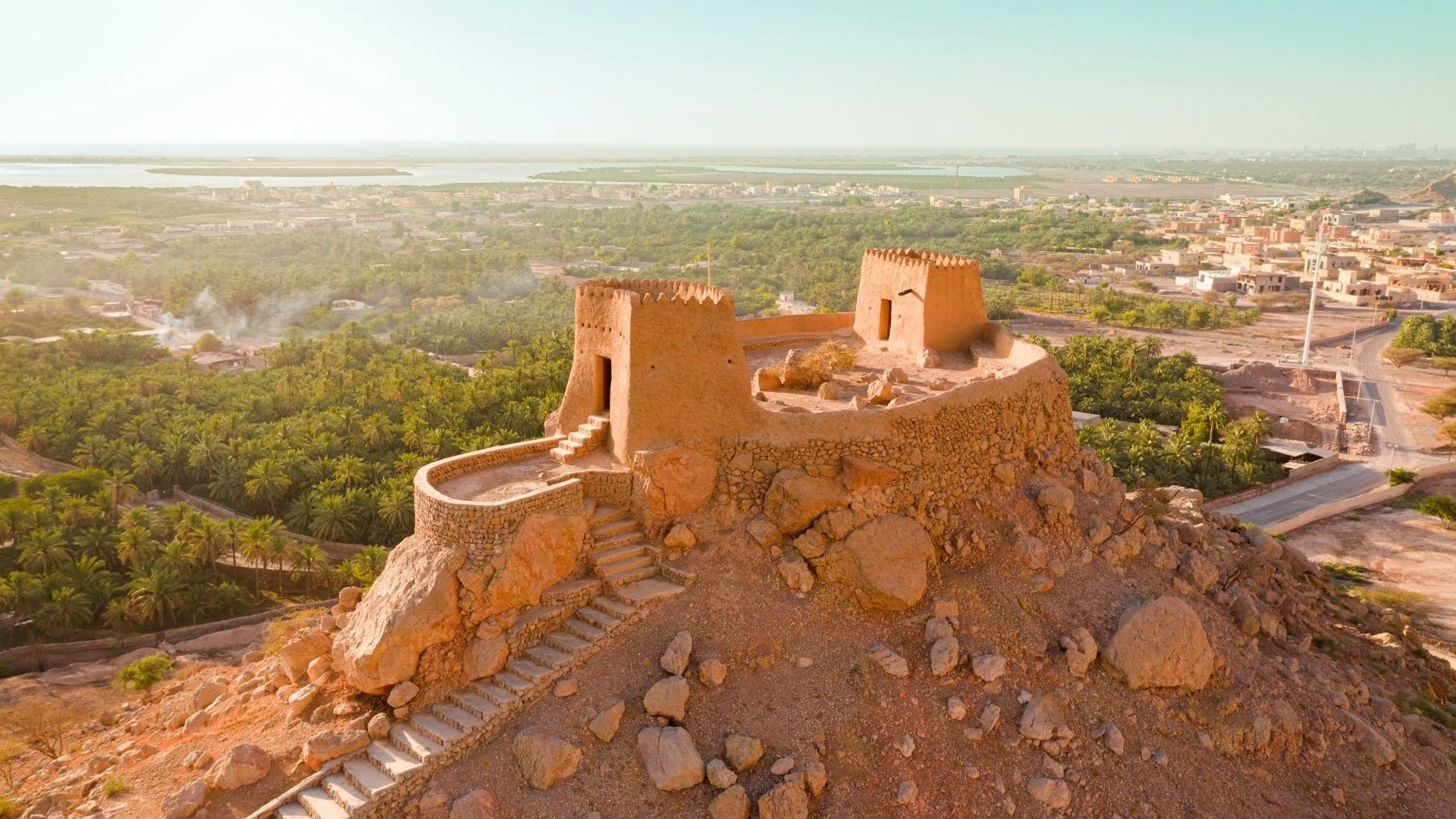
From Jebel Jais, head down towards Dhayah Fort, where the rocky mountains meet green date-palm gardens.
Dhayah is the UAE's only remaining hilltop fort and one of Ras Al Khaimah's most important historic landmarks. A staircase leads to the fort at the top of the hill, where panoramic views stretch across the Hajar Mountains, palm plantations and the coastal plain. The wider Dhayah landscape is also on the UAE's UNESCO World Heritage Tentative List.
The climb is relatively short but steep, so comfortable shoes are recommended.
From here, continue towards the coast and Al Rams, which is only a short drive away.
Discover Ras Al Khaimah's Pearling Heritage at Al Rams
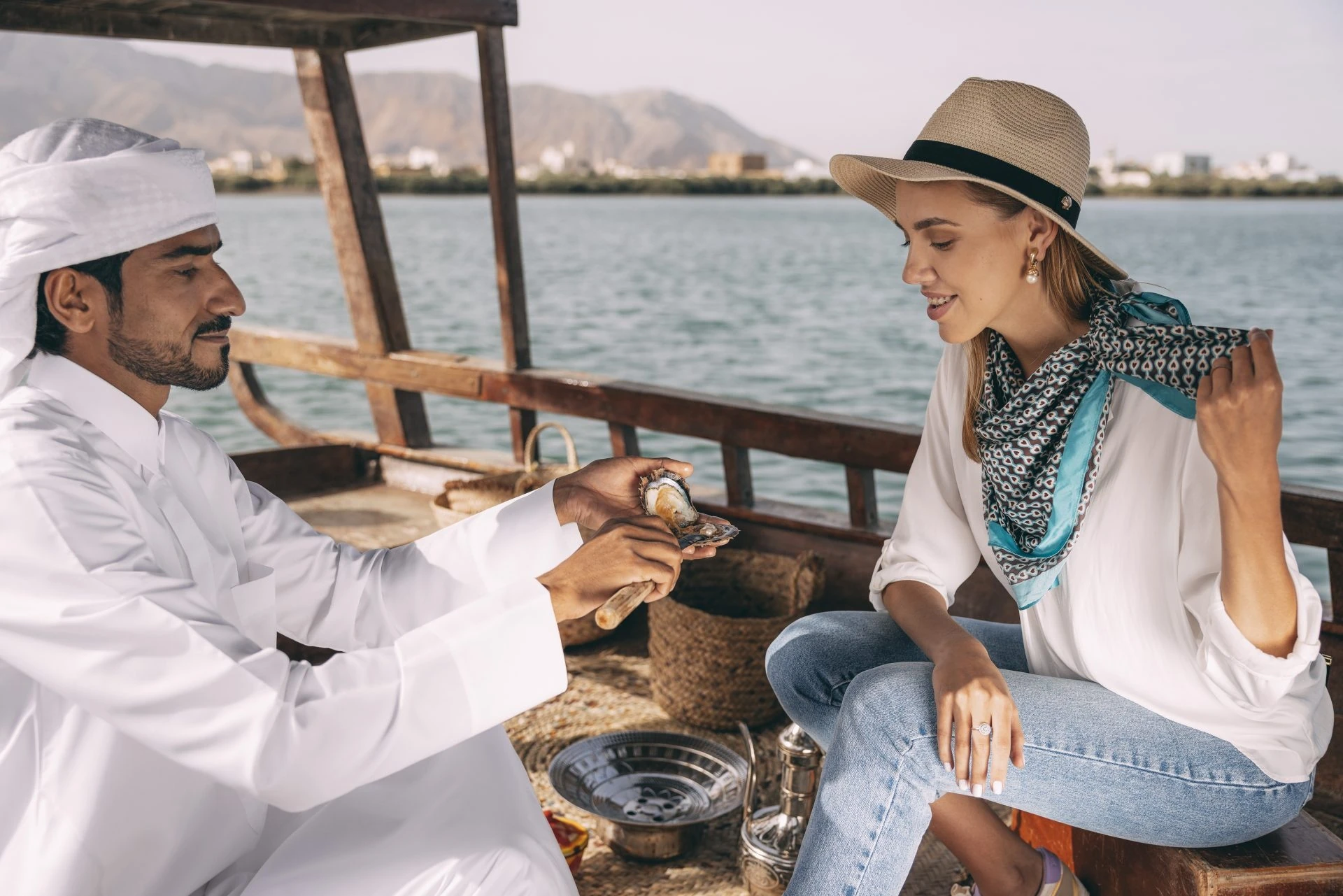
At Al Rams, board a traditional boat for the Suwaidi Pearls experience.
The pearl farm brings Ras Al Khaimah's centuries-old connection with the Arabian Gulf to life. Visitors travel across the water to the floating farm and learn about traditional pearl diving, oysters, historic pearling tools and the techniques used to cultivate pearls today.
The boat journey is part of the attraction, with the waters around Al Rams framed by the Hajar Mountains in the distance.
Allow roughly an hour and a half for the experience and book your tour in advance, as visits operate according to scheduled departures rather than continuous admission.
Have an Emirati Lunch at Eysheat Awal

After Al Rams, continue south into Old Ras Al Khaimah and stop at Eysheat Awal Restaurant in the Old Market.
This is a particularly fitting lunch stop because the food adds another layer to the day's introduction to local culture. Eysheat Awal specialises in Emirati flavours, with dishes such as regag bread, shrimp majboos, mutton dishes and locally influenced seafood.
Its location in the Old Market also means lunch flows naturally into the next part of the itinerary rather than requiring another drive across the city.
Explore the National Museum and Old Town

After lunch, continue through the historic centre to the National Museum of Ras Al Khaimah.
Housed within a former fortified residence associated with the ruling Al Qasimi family, the museum explores the emirate's archaeology, maritime history, traditional life, trade and material culture.
It is a useful stop after visiting Dhayah Fort and Suwaidi Pearls because it connects those individual experiences to Ras Al Khaimah's wider history.
The museum is currently open Tuesday to Sunday and closed on Mondays, so Monday visitors can spend more time exploring the surrounding Old Town instead.
Browse Kuwaiti Souq
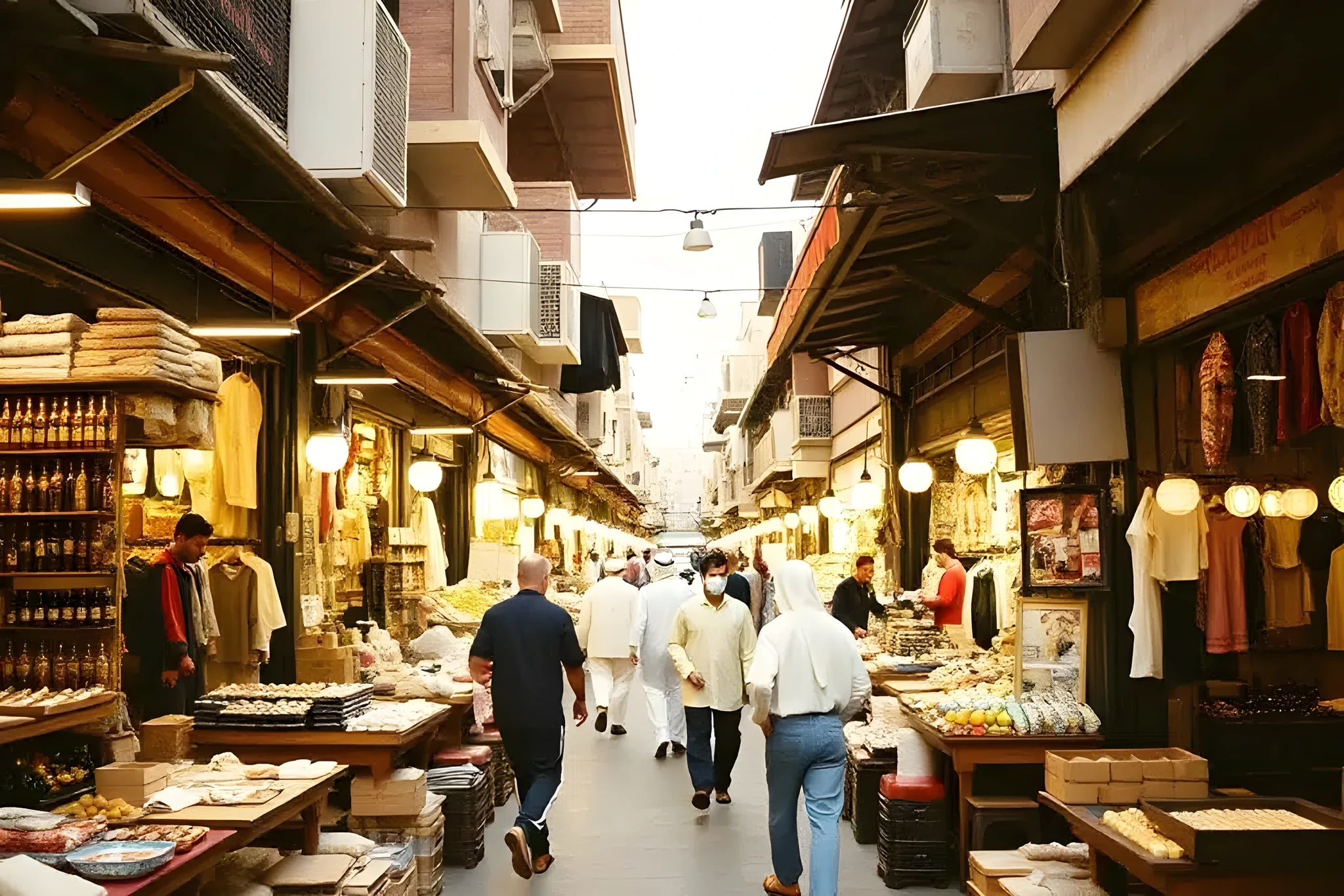
Continue to Kuwaiti Souq, one of Ras Al Khaimah's long-established traditional markets.
The souq has been part of the Old Town for more than half a century and remains a good place to browse textiles, jewellery, spices, bakhoor, Arabic perfumes, accessories and household goods.
Rather than treating it as a major shopping expedition, allow time for a relaxed walk through the market and perhaps pick up a local fragrance, incense or souvenir.
Finish the Day at Al Qawasim Corniche
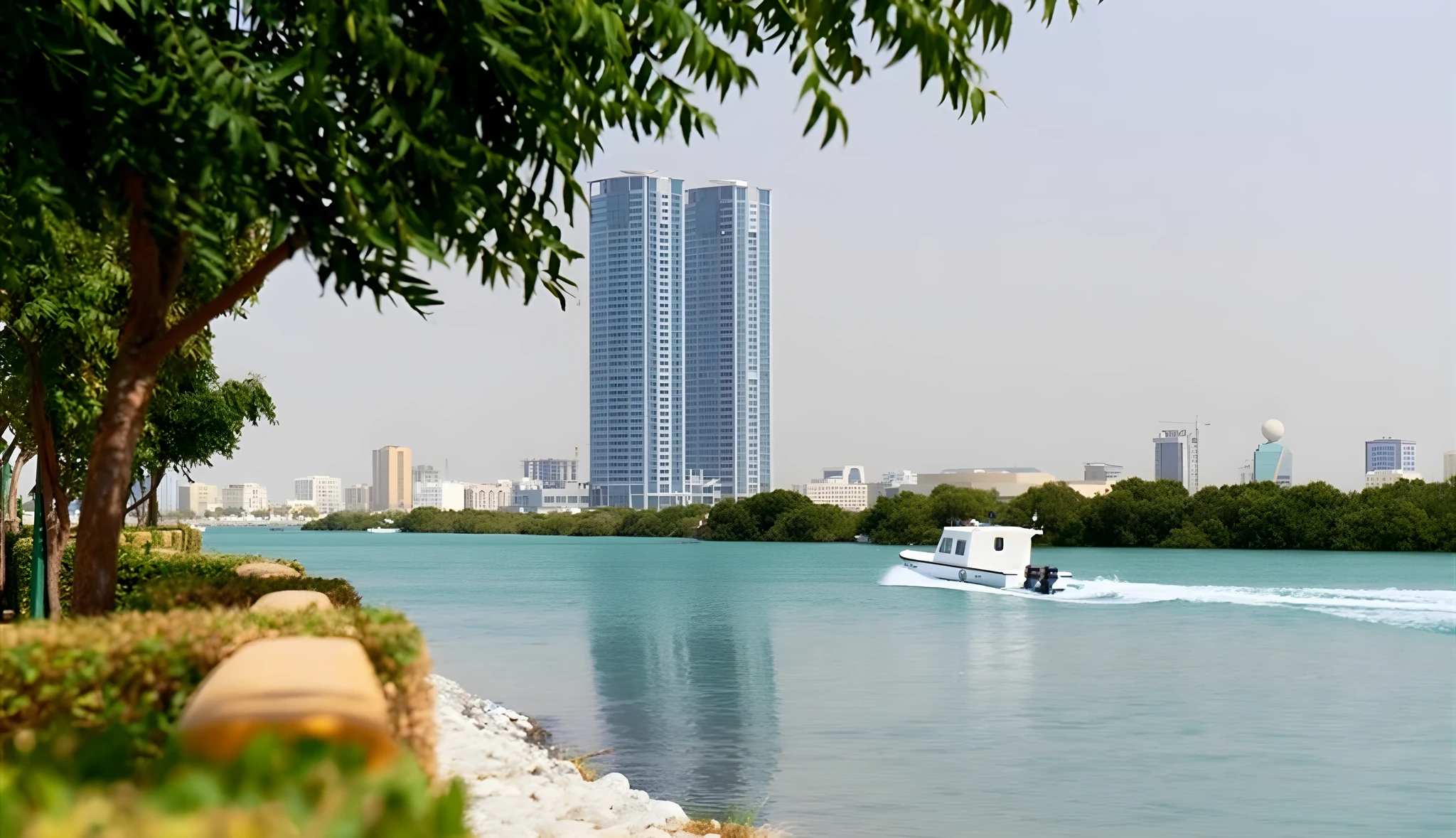
End the journey beside the water at Al Qawasim Corniche, where Ras Al Khaimah city meets its mangrove-lined creek.
Walk along the waterfront as the temperature drops, stop for coffee or dinner, or take a traditional abra ride on Ras Al Khaimah Creek. The passenger abra service connects several points along the creek, including stations around the Corniche.
For a more active ending during the cooler months, kayaking through the creek and mangrove areas is another option.
It is a relaxed finish to a day that began high in the mountains and gradually moved through Ras Al Khaimah's history, food, old neighbourhoods and coastal landscape.
Before You Go
Book Suwaidi Pearls ahead of time, as the tour schedule will influence the rest of your route.
During the warmer months, visit Jebel Jais and Dhayah Fort earlier in the day and leave the Old Town, souq and waterfront for later. In cooler weather, the itinerary can be followed at a more relaxed pace.
If you are visiting on a Monday, remember that the National Museum is closed.
From mountain views and pearling heritage to Emirati food and a quiet evening beside the creek, this route offers a varied introduction to Ras Al Khaimah without spending the entire day rushing from one place to the next.
Read next
 Read
Read
48 Hours in Ras Al Khaimah: A Well-Planned Itinerary
 Read
Read
Where to Go Hiking in Ras Al Khaimah
 Read
Read
Five Ways to Find Adventure in Ras Al Khaimah
 Experience
Hot Air Balloon Ras Al Khaimah
ReadHiking Trails in RAK: Best Routes, Difficulty & Safety Guide
 Read
Read
The Best Beach & Pool Day Passes in Ras Al Khaimah: Your Guide to a Resort Escape Without Booking a Room
What’s on, new openings and the sharpest deals across Ras Al Khaimah, in one short email a week. Free, no noise.
You’re in. The next Brief lands in your inbox.
Ras Al Khaimah, once a week. Unsubscribe anytime.

Getting here, the best time to go, and ready-made itineraries.
Start here →